intelliflo's 2025 advice efficiency survey
Firms embrace AI and digital tools, but inefficiencies remain

The results are in for our latest marketwide adviser research. Now in its second year, the intelliflo advice efficiency survey examines how effectively modern advice journeys are working, and what firms can do to enhance scalability, reduce friction, and put clients at the heart of the process.
This year’s results show tangible progress in digital adoption and the use of AI, but according to our 238 respondents, critical inefficiencies, especially disjointed internal processes, fragmented systems, and resource constraints, continue to drag down overall performance. In fact, 96% believe their advice journeys aren’t as efficient as they could be.


Onboarding obstacles
These challenges are clearly illustrated in the onboarding process, where volume has improved but not speed. Firms are onboarding more than twice as many clients each week this year compared to last, from six up to 13, yet the average time spent per client remains flat at 15 hours. However, more of this time is now spent face-to-face with the client, rising from 40% to 46%.

Some efficiency gains have occurred, with firms saving around 20 minutes per client in report writing, amounting to around four hours a week for the average firm. Unfortunately, this time saving has been largely offset by an additional 30 minutes now spent on plan implementation per client. With 13 clients onboarded each week, that equates to 52 hours a week, or 113 working days a year, spent solely on plan implementation.
In addition, rekeying remains a significant issue. Nearly one in five onboarding journeys is affected by data errors caused by teams having to duplicate information across disconnected systems. Alarmingly, just 1% of firms report error-free onboarding, underscoring the urgent need for better system integration and streamlined workflows to improve data accuracy and reduce unnecessary administration.

Digital progress
Firms continue to digitalise their processes, with 43% of workflows now digital, up from 39% last year. However, this falls well short of the ideal 77% cited by respondents. A technology expectation gap remains, as one in five firms (21%) want to remove all manual or paper-based processes, but to date just 1% have achieved this.
The top three priorities for digital adoption are system integration, cited by 63% of firms (up from 58% in 2024), fact finding at 54% (unchanged from last year), and notetaking and meeting recording at 54% (down from 57% last year).
Advisers continue to report frustrations with internal inefficiencies, system limitations, and time and resource constraints, all challenges that digitalisation could help overcome with the right infrastructure and training.

Increasing use of AI
Last year, 46% of firms said they were exploring AI or planned to adopt it within 12 months, although only one in twenty (5%) felt they had sufficient knowledge to capitalise on its opportunities. Twelve months on, 43% report they’re now actively using AI within their advice journey, suggesting firms are becoming more comfortable with the opportunities for efficiency it can deliver.
Currently, personalisation and automation are the leading use cases for AI, cited by 53% of respondents. Data analysis follows as the second most common application, at 28%. Interestingly, while last year two-fifths (40%) of advisers predicted that compliance would become a key area for AI adoption, only 15% are currently using it for this purpose.
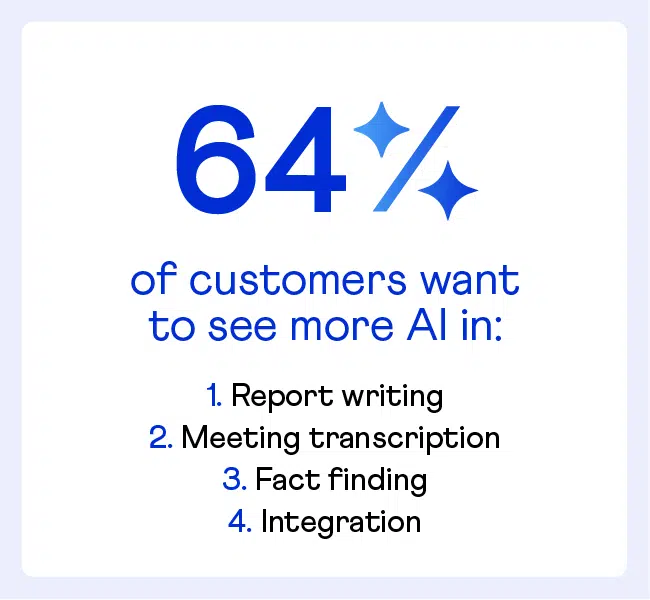
Although there has been progress on using AI within advice, firms believe there is far more to come. Nearly two-thirds (64%) of respondents say they would like to use AI more. The four main expected use cases within firms are report writing (38%), meeting transcription (21%), fact finding (17%) and system integration (16%).

Video and client engagement
Our research also found that although digital interaction with information is rapidly evolving in other areas of our lives, opportunities for digital engagement within the advice sector remain largely untapped.
While the vast majority of firms (92%) now adopt a hybrid advice model, and 41% operate an even split between virtual and face-to-face meetings, fewer than a quarter (23%) of firms are currently offering video content to their clients. However, this looks set to change as 59% of firms believe educational video content would make their clients’ lives easier, including 39% of those who currently don’t use video.
Bridging the gaps
What’s clear from this year’s findings is that while firms are making strides, particularly in client onboarding, adopting digital processes, and selective use of AI, critical operational challenges remain. Fragmented systems, manual rekeying, and inefficiencies in execution continue to undermine productivity and add risk.
The administrative burden driven by Consumer Duty, with its emphasis on demonstrating fair value and evidencing good outcomes, has only increased the pressure on firms to operate more efficiently and transparently. In this context, technology adoption is no longer optional.
The time lost due to duplicated effort and disconnected tools represents not just a productivity issue, but also a potential risk in terms of compliance, data quality, and the client experience. Whether through AI-powered personalisation, automated workflows, or fully digital onboarding, firms that use technology effectively are better equipped to meet rising regulatory expectations and client demands alike.
All firms today use technology to some extent, but the challenge now is to fully embed it throughout the advice journey, and to ensure teams are trained and motivated to use it to its full potential to cut waste, scale operations, and deliver the consistently high-quality service that clients and the regulator expect.

We know the power of effective use of technology. Our eAdviser survey, which analyses how adviser firms make use of the functionality available within intelliflo office, consistently shows that firms fully embracing digital tools, our ‘Champions’, significantly outperform their peers across total and ongoing revenue and clients and assets serviced per adviser.
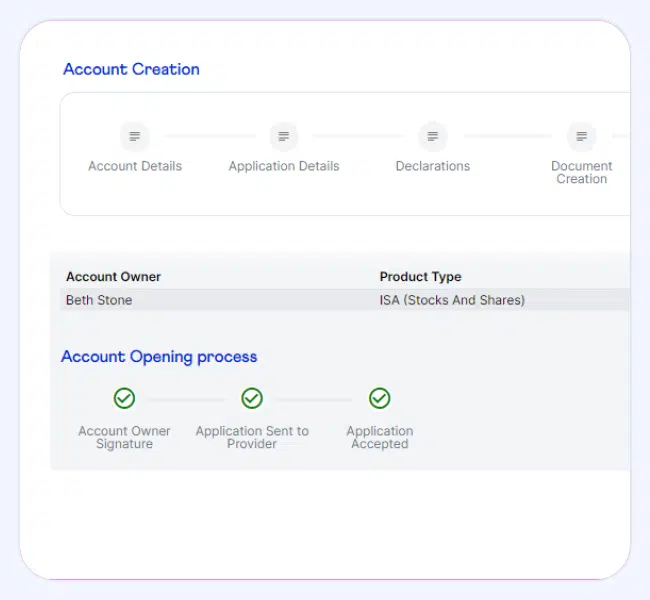
We want to reduce the frustration that advice professionals feel at working with disjointed systems that involve rekeying, errors and inefficiencies, by offering two pathways to greater efficiency.
For firms seeking a single end-to-end experience from advice through to platform, we are continuing to enhance our wealthlink solution to provide everything you need to set up and maintain client investment plans without leaving intelliflo office. One of our early adopters recently reported that using wealthlink cut the effort involved in SIPP transfer account opening from four hours to just seven minutes!

And for those who prefer to create a bespoke technology stack, we’ve launched intelliflo zerokey to eliminate rekeying for good by allowing advisers to transfer client data directly from intelliflo office to platforms and third-party tools in one click.
By reducing time spent on data entry, and importantly reducing errors, intelliflo zerokey should save advice firms hours of work. The progress made in report writing over the last year, with four hours saved every week, illustrates how small changes can lead to big efficiency gains. And all those minutes shaved off different processes will combine to create more time to spend with existing and new clients, without increasing costs or needing to add people.
With Consumer Duty raising expectations around accountability and outcomes, operational efficiency is no longer a nice-to-have. It’s critical for growth and long-term sustainability. As the research shows, the ambition across the industry is clear. Firms are already taking steps to improve their use of technology. What’s needed now is for more providers to follow suit and offer joined-up, paper-free solutions that allow firms to embrace integrated technology and improve efficiency through streamlined processes, less manual intervention and fewer errors.